Showing posts with label professional sports. Show all posts

Wednesday, July 14, 2010

Of Love and Sports

¡Hola! Everybody...
Today, I wax nostalgic... somewhat.

* * *

-=[ Of Love and Sports, the Assassination of New York, and Blackouts ]=-

The two were meant for each other. One’s a born liar, and the other’s convicted.

-- Billy Martin on Reggie Jackson and George Steinbrenner


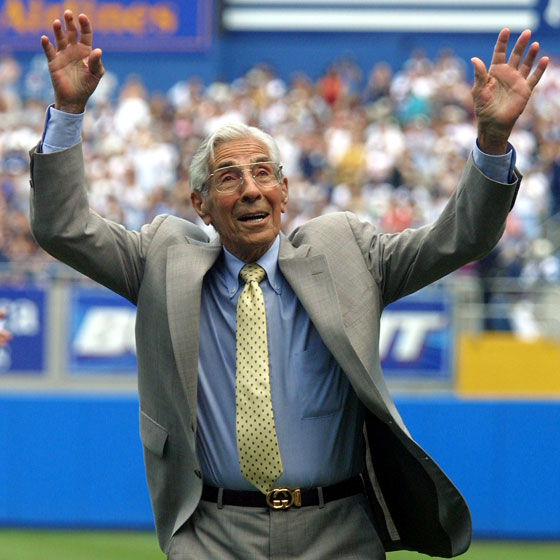
Meatloaf’s Paradise by the Dashboard Light is a song is about a teen-aged boy trying to convince a girl to have sex with him in a car. Baseball is used as a metaphor for sex. Sex would be the “Paradise” for him, but she holds out until he says he loves her and will stay with her forever. The young man almost “scores,” but is thrown out at the plate when the girl decides she won’t have sex with him. The voice of the sports announcer used in the song is none other than Phil Rizzuto, the long-time Yankee announcer.

It was only fitting that colorful Yankee owner, George Steinbrenner, passed away on the day the baseball All Star classic was to be played, therefore overshadowing the game. It’s fitting because old George loved the limelight. But today I come here not to praise Steinbrenner, but to bury him...

Whenever I think of the 70s, the Yankees, and my beloved City, I always think back to those hectic horny days of an abandoned New York reeling from a massive white flight and in the in thrall of a series of Yankee teams that rewrote the way the game is played.

The “Bronx Zoo,” as one of the players would later call the team, was a collection of high-priced baseball stars with huge egos and a determination to win that was only outmatched by their owner’s. They would fight other teams and one another. Everyday, there was some kind of drama brewing about in the midst of the assassination of one of the greatest cities in the history of humankind. One day, their most famous and controversial manager, Billy Martin, woke up and, in a fit of frustration declared that one was a “convicted liar” (referring to Steinbrenner’s conviction stemming from the Watergate scandal) and the other a “born liar” (referring to the team’s volatile superstar of superstars, Reggie Jackson).

Martin was promptly fired for the first of many times... (officially, he resigned, but he would've been fired had he not)

Whole sectors of the city was burned down or literally aflame as the real estate and financial Elites slashed city services, spurring slum lords to burn their properties down in order to collect the insurance. Even so, we had the Yankees to distract us -- and what a team that was! Who can forget the year they came back from insurmountable odds to catch up to and then beat the hated Red Sox in dramatic fashion during a special playoff game? Ask any real New Yorker, and he or she can tell you in vivid detail what they were doing when Bucky dent hit that famous homerun.

There was also that summer of the infamous Son of Sam and “The Blackout.” I remember that summer well; a sweltering city was caught in the grips of the actions of a lunatic, culminating in a total blackout one hot, and sizzling city summer night. Already economically devastated, the looting that took place during that blackout destroyed whole sectors of business districts throughout the city. So many people were caught looting, that the police stopped arresting them and instead beat them down and sent them packing.

I remember there was a downpour in the middle of that night, and it was then, while I organized demands that bodega owners give out candles and milk to women with children, that I fell in love with “La Mora,” a cinnamon-skinned, dark-haired Taina princess -- the same one who would leave me overfucked, underfed, and heartbroken that same cold September.

GAWD! What a summer!

Nevertheless, no matter what, there were the Yankees, fighting everyone including themselves. I remember Billy Martin pushing up on Reggie Jackson and challenging him to a fight on national TV one hot summer night. Martin was a scrawny, scrappy man, known for fighting dirty, drinking with his ballplayers, and his self-destructive tendencies. In short, Martin was the quintessential New Yorker and we loved his crazy ass because he didn’t give a fuck. A brilliant manager, the only way he knew how to motivate people was through intimidation. And here he was, in the midst of a high-powered, high-priced, highly talented group of professionals. There was never a dull moment.

All the while, up front and center and adding fuel to the fire was Steinbrenner. He didn’t understand losing, didn’t understand patience. He wanted to win everyday. He was a mess, and more often than not, his rash decisions often cost the club. But he was a brilliant salesman, a modern-day Barnum, and he understood how the game was changing and he pushed that too. Let’s be clear: Steinbrenner was essentially a right-wing prick. He took hundreds of millions from the City in order to renovate the Stadium and he reneged on almost all his promises. As bad as the City was doing those days, we never really saw a real profit from all those subsidies. It was welfare for the greedy, for sure. The Stadium itself is a dichotomy: situated in the South Bronx, the symbol of urban decay -- Fort Apache.

Steinbrenner was an unmitigated pig who didn’t give a fuck about anything or anybody. Over the years, however, I learned to appreciate some things about him. For one, he gave people chances. He was a sucker for a redemption song, as illustrated by all the chances he offered to the drug addicted Darryl Strawberry, Doc Gooden, and Steve Howe, for example. So I guess Steinbrenner wasn’t all evil. He did give us the Yankees of the late 1970s, and the team’s antics served as the backdrop to my own hilarious crimes that have now grown to story-time delights and I guess for that I should be grateful. So today, I’ll bury old George, but I’ll do it while remembering Meatloaf, Phil Rizzutto, and, of course, Reggie Jackson (who was, after all, part Puerto Rican) hitting those back-to-back-to-back home runs during the playoffs.

Rest in peace, George...

Eddie

Thursday, July 23, 2009

Racism & Sports

¡Hola! Everybody...
As it is, we spend more right now on health care than is necessary for universal coverage. The issue on the table is no longer whether we should do it (we must), nor whether we can (we already spend more for much less). The national healthcare “dialog” has degenerated into how we can continue to place profits before people and still make it look as if “reform” has been effected.

* * *

-=[ The Sportin’ Life & Million Dollar Slaves ]=-

Shaq is rich, the white man who signs his check is wealthy...Wealth is passed down from generation to generation; you can’t get rid of wealth. Rich is some shit you can loose with a crazy summer and a drug habit.

-- Chris Rock on wealth


One of the consequences of racism is that whiteness is rendered invisible. Whites can afford to be nonchalant about race because they cannot see how this society produces advantages for them because these benefits appear so natural they are taken for granted (Kinder & Sanders, 1996). They literally do not see how race permeates America’s institutions and how it affects the distribution of opportunity and wealth.

What’s more, if people of color cry foul, if they call attention to the way they are treated or to racial inequality, if they try to change the way advantage is distributed, if they try to adjust the rules of the game, white Americans see them as trouble makers as asking for special privileges.

If there’s any realm in which the color line should have disappeared by now, it should be professional sports, where measures of achievement are clear-cut, empirical, numerical, and uncontested. Still, race matters in sports and not in the way perceived by many. Sports is an arena that’s seen as one of the most meritocratic, colorblind institutions in American life. Yet, though 79 percent of National Basketball Association (NBA) players in the 1996-97 season were black, 76 percent of the head coaches were white. By 2001, the proportion of white coaches dropped to 66 percent, as ten NBA coaches were black.

Although 66 percent of the National Football League (NFL) players in the 1996-97 season were black, 90 percent of the head coaches were white (Lapchick & Matthews, 1998). by the 2000-2001 season, the numbers had not changed; there were still only three African American head coaches, accounting for 10 percent of NFL coaches (Lapchick & Matthews, 2001).

The situation is not much different in college sports. Sixty-one percent of Division I-A male basketball players were black in the 1996-97 season, but 85.5 percent of the head coaches were white. The numbers had barely changed at the end of 2001 season, as the proportion of white head coaches decreased to 78 percent. In addition, although 52 percent of the Division I-A football players were black during the 1999-2000 season, 92.8 percent of the coaches were white. By 2001, nearly 97 percent of the head coaching positions had gone to whites.

These discrepancies are unlikely to even out anytime soon. After the 1996-97 college football season, there were 25 openings for head coach of Division I-A teams. Only one of those schools, New Mexico State University, even interviewed a black candidate. During the 1997 and 19998 seasons, thirteen head coaches were named in the NFL, a turnover of almost 50 percent in the thirty-team league. Not one of the replacements was black. During the next three years, the situation did not change much. Although the NFL turnover rate was 75 percent between 1998 and 2001, only one African American was hired as a head coach.

Can these inequalities be described using the conservative framework? Can these discrepancies be explained by the concept of merit? c’mon, I know quite a few reading this like to subscribe to the “it’s up the individual” philosophy. Some may say that these head coaches got their jobs because they had the best records, for example. The evidence, however, does not support this explanation. Up until 2001, there had been only four black head coaches in the history of the NFL. Each of them has either played or coached on a Super Bowl championship team, or was a college conference coach of the year. By contrast, as of 2001, only thirteen of the twenty-seven white NFL head coaches held this distinction. Even a cursory analysis shows that merit has little to do with the criterion of for being a head coach. the potential pool of blacks has included (to name just a few) Johnny Roland, All-American running back and Pro-Bowler who has been an assistant coach for twenty-two years; Art Shell, former Pro-Bowler with a 56-41 record as head coach of the Raiders and currently an NFL assistant coach; and Sherman Lewis, ten-year offensive coordinator for the Green Bay packers and an NFL assistant coach for twenty-nine years.

Who was chosen? One thirty-four-year-old with eleven years of coaching experience, two of which were as offensive coordinator, and a forty-two-year-old with four years experience as an NFL assistant coach and one year as a college head coach. Each of these men had been an assistant coach under Sherman Lewis, who was passed over. Also chosen as head coaches were a former head coach whose previous four years produced records of 8-8, 7-9, 7-9, and 2-6, and ten men over the age of fifty-five with an average record of 6-10. Only one member of this “old boys club” had made the playoffs the season before. All were white. It appears, contrary to the bleating of conservatives and some whites, that race matters more than merit in hiring NFL head coaches.

According to a report released in 2002, African Americans in the NFL are the last hired and the first fired (Madden, 2004). Few of them were involved in the interview process. Since 1920, the league has hired more than four hundred head coaches and, as of the end of the 2002 season, eight of them (2 percent) have been African American. As one observer offered, “When you see a Denny Green fired after the record he has built and then not get a new job, or Marvin Lewis coach the best defense ever, win a Super Bowl and two years later not have a head job, you know something is wrong” (George, 2002).

Similar patterns are found in other sports. a study of lifetime pitching and batting averages, fir example, shows that black ballplayers have to out-hit and out-pitch their white counterparts by substantial margins to win and keep their jobs. One little-known fact is that mere journeymen can have long and profitable careers as long as they are white, but among African Americans, only the very best superstars and above-average players will succeed. Perhaps this is why there are so few black baseball managers in major league baseball. Baseball typically hires managers, coaches, and front office personnel from the echelon of “good but not great” players. Because most of these players happen to be white, black ballplayers experience difficulty becoming coaches.

The interesting point to all this is that professional sports mirror the cultural patterns of the larger society. In a national project looking into the hiring practices of large law firms, for example, it was found that black applicant s with average grades are less likely to be hired than whites with the same records. Black partners are much more likely than whites to be Harvard and Yale graduates. The “black superstar” requirement is most evident at the most prestigious law firms. As one partner at an elite Chicago law firm told researchers, his firm sets “higher standards for the minority hires than for whites. If you are not from Harvard, Yale, or the University of Chicago... you are not taken seriously” (Staples, 1998).

As these and future examples will show, race counts heavily in the ways Americans are treated. Being white has its advantages, and being non-white has its disadvantages. The problem of race in America is that people are treated differently according to the color of their skin. The most important aspect of being white, it follows, is not pigment, melanin, or skin color. Rather, it is the connection between being white and having better economic opportunities and life chances.

I will be going on vacation after this Friday, but I’ve queued some entries for next week. Because I see so much energy on the denial of racism, I will document its existence in major areas. next up: healthcare.

Eddie


References

George, T. (2002, October 6). NFL pressured on black coaches. New York Times, p. 9.

Kinder, D. R., & Sanders, L. M. (1996). Divided by color: Racial politics and democratic ideals. Chicago: University of Chicago Press.

Lapchick, R., & Matthews, K. (1998). Racial report card: A comprehensive analysis of the hiring practices of women and people of color in the National Basketball Association, the National Football League, Major League Baseball, the NCCA and its member institutions. Boston: Northeastern University, Center for the Study of Sport in Society.

Lapchick, R., & Matthews, K. (2001). Racial and gender report card. Boston: Northeastern University, Center for the Study of Sports in Society.

Madden, J. F. (2004). Differences in the success of NFL coaches by race, 1990-2002: Evidence of last hire, first fire. Journal of Sports Economics, 5(1), 6-19.

Staples, B. (1998, November 27). When a law firm is like a baseball team. New York Times, p. A42.

Headlines

[un]Common Sense