Showing posts with label criminal justice. Show all posts

Monday, August 15, 2016

Freedom is...


Hola Everybody,
While you were watching TV and being treated to Donald Trump’s latest attack of verbal diarrhea, climate change advances. Last week a downpour with an estimated likelihood of just once every 500 years, and roughly three months’ worth of rainfall during a typical hurricane season literally submerged southern Louisiana under water. It’s exactly the sort of rainstorm that’s occurring more frequently as the planet warms.


But you haven’t heard much about this as the news cycle is too busy demanding you vote for Hillary Clinton, who supports environmental degradation or else. Fuck Hillary.

If you're seeking assistance, click here for a link that can be a resource. More links after the post...

Freedom
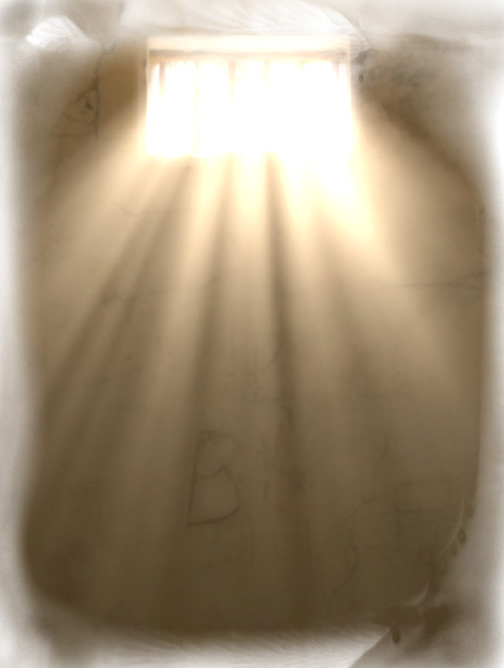


I escaped prison the day I broke free of the shackles of my mind.


I laugh when people who know me ask, “How did, you know, how did you survive being in prison?” I laugh because most of the time what they are really asking is if I was able to avoid being raped while I was incarcerated. I don’t possess an imposing physique and my looks are not what people typically consider “jail material.” In fact, I could easily pass for the good guy next door. I’m also “articulate.”


::arches eyebrow::


My answer -- that I survived by using my most powerful tool, my intelligence -- doesn’t seem to satisfy most people. I believe that’s because most people aren’t aware of what life in prison is actually like. Sure, the way the system is set up promotes violence. It’s a subtle form of control that I’ll write about at some later date. As a result of this dehumanization process, there’s always that palpable potential for danger just underneath the surface, but the most damning part of being incarcerated is that nothing happens. The same shit that happened yesterday will happen today, and the day after, and you feel your life wasting away. That dreaded monotony and the feeling of squandered life energy combined with the daily act of humiliation that is the core experience of being incarcerated, is what makes prison a hell.


What’s worse is that adaptation demands that you become conditioned to that existence -- at least to varying degrees. It’s a form of psychological conditioning that acts like an erosive factor to your sense of humanity. Many lose that part of ourselves. That’s the hardest part of incarceration.


Yeah, I k now you watched the HBO series, Oz, and you’ve seen the films that depict prison rape and scenes of unspeakable violence, but that’s not the reality of being locked up. Most of the time, the horror of incarceration resembles a steady drip from a leaking faucet rather than a torrent. And that drip is your life oozing away from you as if you were slowly bleeding out.


That’s not to say prison life isn’t violent -- it can be and often is. I’ve seen shit I can’t begin to tell you. One of the things I am most proud of is that I had only three violent encounters throughout my prison experience. All three occurred before I began to practice Buddhism. Two of those experiences I felt were unavoidable, one I committed from stark fear.


The following is based on actual events... 


I had just arrived at Sing Sing to begin my prison sentence and I was wondering why the fuck they had sent me to a maximum security prison, when my security clearance was clearly marked “minimum.” That meant, according to my prison comrades, that I should have been sent to some camp with no walls, cable TV, and microwaves to serve out a relatively short prison sentence. But nooooo, these muthafuckas had sent me to a max. I was, like, what the fuck?!


Being processed into the prison system psychologically resembles initiation into a cult. Your hair is shaved, your body sprayed with some lice removal solution, your clothes and name are taken away and you’re given a uniform and a number to replace them. In addition, the first fool who says something smart-assed to a corrections officer (“CO”) is beat down as an example of what happens to wise guys. 

The COs are almost all white, all burly, and mostly mean in a sadistic kinda sorta way. One even had a tattoo depicting a black infant with the universal symbol for “No” superimposed over it. Like the “no smoking” signs you see in designated areas: the picture of a cigarette X’ed out. Which really shouldn’t come as a surprise since almost all of upstate New York, where the majority of prisons are located (prisons are a warped jobs program for poor rural whites) resembles the south. I shit you not, with all its hate groups, upstate New York is a white supremacist’s wet dream. I think most of them work as correctional officers.


Anyway, you go through an orientation period wherein you’re locked up for 23 hours a day. You’re given one-hour recreation time, and three times a week, they would take a bunch of us to some dark subterranean showers. I never went to the showers. At least not during the orientation phase. I was too damn pretty, shit! LOL I would bathe in my cell.


Sensory deprivation is a bitch. Being locked up in a small cell for 23 hours does things to your mind. For one, you crave conversation, or at least some kind of human interaction. Secondly, it does things to your perception of reality. For some guys, it was downright hell. We spent a weekend like this while waiting to be sent to our permanent prisons. Once we arrived at Sing Sing they housed us in the “D” ward: a tier specifically for new people. Again, we were locked up for 23 hours a day until our permanent cells were determined. So, a group of us had been in 23-hour lock-up for almost a week by the time we were sent to our permanent cells/ locations and by then most of us were going a little stir crazy.


Noise was what really challenged me while in prison. “D block” was also very disorienting in that it was noisy. There was this guy in the cell across from me and I was having a conversation with him until the guy next to my cell informed me that he was crazy and wasn’t really talking to me. Slowly, I realized my neighbor was right: the man wasn’t talking to me, he was talking to himself. The prison number is composed of a letter followed by two numbers another dash and four more numbers. The first two numbers come from the date you were admitted to the prison system. The individual’s middle two numbers were “68.” That meant he had been in prison since 1968 (this was the 1990s). I would never forget that.


Meanwhile, my next-door neighbor wouldn’t stop chatting. For the most part, I would ignore him. He kept asking if I had a cigarette and I kept telling him I didn’t have any. He said something that was funny, something along the lines of needing a cigarette more than poor people in hell need ice water. That made me laugh. I told him all I wanted was my freedom. 

There was something off about him, however, he was to forthcoming, too chatty and that made my street sense go on red alert. I noticed one day he was smoking pot. He had gotten pot from an incarcerated person who worked as a janitor that would pass by our cells every day. There were lots of drugs at Sing Sing. There was even a prostitution ring! Over time, my chatty neighbor had offered me pot, candy, cigarettes -- all kinds of things, but I wasn’t interested. His behavior definitely had me on full alert. No one gives anything for free in prison. 


When we were finally released into the general population, we all sat down in the tier happy to be able to move around and watch the TV. My next-door neighbor, Manuel, sat next to me along with the others who had come along with me. I moved away from my neighbor because my gut told me he was bad news. He got the message and left me alone. 

After some time, I was so into reading a borrowed copy of Dostoyevsky’s The Idiot, I hadn’t noticed, and before I was fully aware of it, a group of three incarcerated persons approached my neighbor’s table. I noticed that everyone had scattered, so I followed suit. I almost shit my pants literally, as the group produced knives and proceeded to stab Manuel repeatedly. We all watched horrified as the gang of slashed Manuel’s face and arms. I learned after that he had copped drugs and other items and didn’t pay for them.


I still remember Manuel’s shrieks and pleas for mercy to this day. 


All I wanted was my freedom.


My name is Eddie and I’m in recovery from civilization… 

Update: More links for disaster relief/ assistance:

Click here to support Baton Rouge flood victims


Click here to join Rouses in supporting flooding disaster response efforts

Monday, February 15, 2016

The Death Scalia and the State of Criminal Justice

Hola mi Gente,
If you haven’t already, get your behind to a theater near you and watch Michael Moore’s latest, Where to Invade Next. I would do a review, but I don’t want to spoil it for you. Suffice it to say that I think you should see it and that it will remind you of why we could be a great country…

* * *


The Death of Scalia

 In the Era of The Collapse of U.S. Criminal Justice System


Before I move on to the significance (or lack thereof) of Scalia’s demise, I would like to share an anecdote. If you bear with me a moment, I think you will be able to see the connection I am trying to make.

Years ago, I stood in front of a judge, the future of my life in the balance. What that judge most likely did not know about my appearance says a lot about our criminal justice system. First, I was incarcerated though I had not been convicted of any crime. Because I could not afford bail, I was remanded to one of the most notorious penal colonies in the world, Rikers Island.

The following is called “Bullpen Therapy,” by those like me who have had to endure it every time we appeared before a court… 

Before I appeared before a judge (usually late in the afternoon), I was awakened at four in the morning. I was served breakfast in the mess hall (I was once served oatmeal that had maggots in it) and then, after maybe 10 minutes allotment time for eating, I was taken and put into a cage, generously called a holding cell or bullpen,  meant for 25 that contained maybe 50 people. The sole toilet was overflowing with feces and there was no room to lie down.

After about four hours, around 8:00 AM, the names began to be called. Once your name was called, you were shackled and put on a bus. Once the bus was filled, you taken to the county court where your alleged crime occurred and then put in another holding cell or bullpen, this one even more crowded than the one before. There you waited hours. The stink of the place was nauseating enough, but what they fed you for lunch was worse: usually slimy pieces of bologna between slices of barely edible white bread. Greasy cups of tea or sometimes Kool-Aid in Styrofoam cups was offered. 

If you were lucky enough to see your court-appointed attorney, it was for one or two minutes at the most. Oftentimes, they spoke to you while walking from the door to the front of the court, sometimes never even bothering to look at you in the eyes. You stood before the court and your public defender, assistant district attorney, and the judge would discuss your future as if you were not there. This would last maybe two-three minutes at the most. Sometimes, you would go through this process and if your defender was absent or the assistant district attorney was not prepared, you would be sent back without even seeing a judge or getting your date adjourned.

As soon as your court appearance was over, the court officer would escort you back into the bowels of the system where you would wait for hours until a bus would come and take you back to Rikers Island. The whole process I have described here could take anywhere from 20 hours or more. The same process was repeated every time you appeared before the court. By the time you were returned to the dorm and the hard bunk you slept on, you would be so physically and psychologically exhausted that you would promise yourself not to do it again. Indeed, I know of scores of people who, rather than go through the process of a court appearance again, would plead guilty to crimes they had not committed instead. 

If you think this process was the exception rather than the rule, imagine what I have just described happening tens of thousands of times in courts across this nation every day. Our criminal justice system is a conveyor belt of human bondage and has nothing to do with any high ideals of justice of fairness. The vast majority of the people on this conveyor belt are Black and Brown people -- mostly young men from the poorest communities in our land.

During one particular arduous Bullpen Therapy session (what many call justice), my judge refused to adjourn my case. I had come twice before him and due to various reasons (absent legal defender, ill-prepared ADA, etc.) and had to be turned away. So this is what the judge did: He became judge, defender, and prosecutor. In an instance he turned to my public defender and instructed her on what she needed to say and do. The he became a judge again and addressed the ADA. When the ADA demonstrated cluelessness, the judge became the prosecutor and instructed the ADA (who was busy picking up legal papers he had dropped on the floor) on what he had to do. Then the judge became a judge again and set another date for my case. What was hanging in the balance? Possibly 15 years of my life.

This is our criminal justice system. It is a system in which the rule of law has vanished. Prosecutors stand at this assembly line and decide whom to punish and how severely. Almost no one accused of a crime will ever face a jury. Inconsistent and abusive policing, rampant plea bargaining, overcrowded courtrooms, and ever more draconian sentencing have produced a gigantic prison population, with Black and Latin@ citizens the primary defendants and victims of crime.

What is interesting is that many years later, I was describing this incident to a group of lawyers who thought the judge’s actions were an example of legal genius. And this is where Scalia comes in. It is this unflinching reverence for authority that scares me. I am sure that the same people heaping praise on the most bigoted Supreme Court justices will no doubt do the same for war criminal, Henry Kissinger. It is this slavish adoration of authority that really makes, pardon the expression, my dick itch.

I am sure Scalia had no clue about the underbelly of the system he personified or represented. I doubt very much he was aware of “Bullpen Therapy” as I experienced it. In fact, I doubt the judge that eventually sentenced me knew what was going on in the bowels of his own court. Well, I come to bury Scalia, not praise him. For me, Scalia personified the essential evil of our failed criminal justice system. I do not wish to join in the now widespread and hypocritical praise for Antonin Scalia, one of the worst Supreme Court justices in living memory.

Scalia was not merely a conservative, which was bad enough, he was a reactionary authoritarian, whose only desire was to form and advance a theory of justice that was outdated by 1860. Scalia was an imperceptive, bigoted, factually knowledgeable but dogmatic thinker who had shut the world out of his awareness long before he had come to the bench. Fortunately for the rest of us, the world is rid of him. Scalia, for all his deep knowledge of law, remained devoutly oblivious to the changing reality around him and to the whole complex history of dissent from traditional ideas that had been going on since the 18th century. His was an ideology that facilitated the kind of justice that I, and many other Blacks and Latin@s, were subjected to.

My name is Eddie and I’m in recovery from civilization… 

Saturday, April 6, 2013

Retribution as Justice

¡Hola! Everybody...
The most challenging aspect of blogging is the art of adequately articulating complex issues in everyday language in a short amount of space. I often miss the mark in this regard. Some of the following will serve as the basis of my discussion at Columbia University this morning.
* * *
* * *

From the Plantation to the Bing: Retribution
You ain’t gotta be locked up to be in prison / Look how we livin’ / 30,000 niggas a day up in the bing, standin routine / They put us in a box, just like our life on the block.
-- Dead Prez, Behind Enemy Lines

            Some of the poorest Brooklyn city blocks are also some of the priciest. You couldn’t tell by the surroundings or by the people who live there -- mostly people of color most of whom live below the poverty line. They are called million dollarblocks by criminal-justice experts who study this phenomenon: In Brooklyn at one point, there were 35 blocks that fit this category -- city blocks where so many residents were sent to state prison that the total cost of their incarceration exceeded more than $1 million.

            At the same time, a quick look at the surrounding schools and other social institutions in these areas would bring shame to any right-thinking American, regardless of color. The following is an attempt to articulate a problem from a civil rights perspective with a street-smart sensibility.

            In a relatively short period of time, we have moved from a nation that had the audacity to envision a Great Society to a nation that now incarcerates more people than any other. While the U.S. has 5% of the world’s population, it accounts for 25% of the world’s prison population (most of those in US prisons are people of color). At the same time, we remain the most violent and crime-ridden of all advanced democracies

            How did we get here? Well, it wasn’t by accident and it didn’t happen overnight. In order to understand how we became a nation of prisons we have to look at crime and punishment from a historical context. A task I couldn’t possibly hope to do in a one or two-page Word document. Still, before I move on, I have to at least try.

            Sociologist Loic Wacquant (2002) maintains that historically not one but several institutions have been implemented to define, confine, and control African-Americans in the United States. The first was chattel slavery which made possible the plantation economy and the caste of racial division from colonial times to the Civil War. The second was the Jim Crow system of legally imposed discrimination and segregation that served as the foundation for the agricultural society of the South from the close of Reconstruction to the Civil Rights revolution which toppled it a full century after abolition. America’s third mechanism for containing the descendants of slaves in the Northern industrial metropolis was the ghetto. It happen along with the African-American Great Migration of 1914–30 to the 1960s, when it was rendered partly obsolete by the mounting protest of blacks against continued racism, culminating with the urban riots of the 1960s. The fourth, Wacquant contends, is the institutional complex formed by the leftovers of the black ghetto and the prison/ industrial complex with which it has become joined by a linked relationship with institutional racism.

            What this suggests is that slavery and mass imprisonment are intrinsically linked and that we cannot understand one -- its timing, composition, and inception as well as the silent ignorance and acceptance of its harmful effects on those it affects -- without returning to the former as a starting point. In other words, from a historical viewpoint, the mass incarceration of mostly people of color in the United States is a direct offshoot from the roots of the institution of racism.

            Now, you might be wondering what I mean by a “street-smart sensibility,” and if you bear with me, I’ll try to explain. I cannot, in all good conscience, profess to know much about present-day urban street culture. As a Nuyorican born and raised in the ghettos of New York City, however, I was raised during hip hop’s inception (an articulation of the street if there ever was one) long before MTV got hip to it, and long before hip-hop culture became mainstream. I will be honest and say I stopped listening to hip hop before it made its way to the mainstream of U.S. popular culture (via Yo! MTV Raps or BET). However, through the years I have maintained an interest in some groups that I felt offered a powerful social message -- groups such as Public Enemy, A Tribe Called Quest, and some others, but I don’t know jack about contemporary hip-hop, nor do I like much of it. For me, hip-hop was more than a musical genre; it was a ghetto scream calling out for recognition, combining several elements of modern and traditional culture, not the least of which was technology. Hip-hop was an urban folklore expressing the gritty reality of life in the mostly black and Puerto Rican ghettos of New York City.

            I think hip-hop is relevant to a discussion of mass incarceration because its attitude and moral stance is often called into question and vilified by both black and white conservatives. I contend that hip-hop, as the main vehicle for a philosophy of the street, informs this discussion and has the potential to give it a proper philosophical framework.

            Hip-hop as the dominant chosen form of entertainment and instruction of gifted young people, has both good and bad effects. If we look beyond the polemics, hip-hop also serves to resist (and sometimes reinforce) the effects of a postmodern world steeped in free-market fundamentalism, aggressive macho militarianism, and increasing privatization of the social sphere. The racial dimension of hip-hop is unavoidable, and it is here where hip-hop, if looked at as more than mere cultural expression, can inform and illuminate the present dialog.

If we view criminal justice as retribution, then we have to acknowledge that justice as retribution mirrors the sentiment that vengeance is sweet, redeeming those who have been wronged at the hands of others. It is a desire often expressed by rappers themselves. Yet their desire for retribution isn’t proposed as part of a legitimate system of punishment. For one, the situations they portray are oftentimes way outside the law. However, lurking under rappers’ desire to settle scores lies a steadfast belief that the law does not (and never did) protect them. If the law doesn’t protect you and won’t guarantee justice, then it follows that you may have to protect yourself from your enemies.

            Many rappers are skeptical about justice in America and alarmed by our criminal justice system. Hip-hop lyrics strongly suggest that racial bias in our criminal justice system undermines the notion of equal protection under the law. They also strenuously question whether the historically unprecedented massive effort to incarcerate black men serves the purpose of public safety. For them, the notion of the public good and retribution appears as a facade for an unjust form of social control that helps maintain a system of privilege for whites. Rap music often aims to strip away the veneer of justice from a system that unfairly targets youth of color.

Circle the block where the beef’s at / and park in front of my enemy’s eyes/ They see that it’s war we life-stealers, hollow-tip busters.
-- Nas, Every Ghetto

            The popular idea of retribution as a legally sanctioned form of punishment is based on the assumption that criminal acts call for punishment -- separate from the consequences of punishment, such as permanent disenfranchisement and the enduring collateral consequences of imprisonment. From this perspective, the ends (in this case, retribution) justify the means at whatever societal cost. The point being that justice is served only when wrongdoers suffer.

            In a lawless context, the line between retribution and self-defense is not so clear, but advocates of retribution (“retributivists”) are not interested in retaliation as a reaction to a perceived threat. They advocate retaliation for wrongdoing as a matter of justice. This led one of the most famous retributivists, Immanuel Kant, to stress the difference between vengeance and retribution (a persistent theme in the western and film noir genres, by the way). In Kant’s view, vengeance is emotional and personal, reckless and often disproportionate to the crime.

            A civilized society, Kant argued, would replace vengeance with retribution. Yet the ideal of retribution carries more than a trace of vengeance, as the French philosopher, Michel Foucault, emphasized in Discipline and Punish: The Birthof the Prison (1995). Some recent retributivists, as in Jeffrie Murphy’s Getting Even, urge us to embrace the emotional and the personal value of punishment as retribution. These philosophers accept the connection between vengeance and the justification of punishment. They offer us four conditions that vengeance must meet in order to be considered justice:

  • Communication. The penalty must communicate what the offender did wrong.
  • Desert. The punishment must be deserved.
  • Proportionality. The punishment must fit the crime.
  • Authority. A legitimate authority must administer the punishment.
            When these conditions are met, it is claimed, vengeance leads us to justice. However, rappers and street poets tell us a cautionary tale -- the retributivist’s conditions aren’t met. For many people living in marginalized communities, the overriding sentiment is that the authority of a government that doesn’t care about some of its people can’t claim legitimacy. A legitimate government serves the interests of all its people, including minority groups. A government that fails to provide equal protection for all manages only to exercise power, not legitimate authority. In other words, might does not make right.

            The most basic rights guaranteed by the Constitution and associated with our criminal justice system are the following: people should not be subjected to unreasonable searches and seizures (Fourth Amendment); people are innocent until proven guilty through due process of the law (Fifth Amendment); people should not be subjected to cruel and unusual punishment (Eight Amendment); people should be equally protected by the law (Fourteenth Amendment).

            Many street artists and activists correctly point out violations of these basic constitutional rights -- police and prosecutorial misconduct, lack of access to legal counsel, unfair sentencing policies, and inhumane prison conditions. These are well documented and disproportionately affect African Americans and Latino/as.
Consider the ongong trail regarding the racially inspired stop and frisk policies of the NYPD. Racial profiling is a policing strategy that is strongly correlated with excessive force and the disproportionate incarceration of minorities (Amnesty International, 2004). Problems such as these undermine not just rights in the U.S., but international rights as well. In addition, they call into question whether many punishments have been fairly implemented.

            Grounds for doubt about punishment as retribution extend beyond racial bias in its application. How could we know whether the desert condition or the proportionality condition for justice as retribution has been justified? Consider the following articulation from a leading retributivist on fitting the punishment to the crime:

Tailoring the fit appears to depend on the moral sensitivity or intuitions of the punishers. When is the fit right? When does a suit of clothes fit? When it feels right? Yes, but also when it looks right to the wearers and others... Morality is an art, not a science.

            Statements such as this should give us cause for alarm. The lack of a shared basis for moral judgment in a multicultural, multiethnic, multi-religious America dooms the justification of punishment. In the U.S. the system of punishment costs about 60 billion dollars per year. It destroys families and communities, and it deprives those caught in its maws their most basic liberties, often for a lifetime. Biblical references to the scales of justice, “an eye for an eye,” or the art of morality are woefully inadequate as a justification for a system of punishment.

            The main justification or rationale for punishment is in actuality about social control, not desert. Many artists, activists and just plain people from besieged communities know this all too well through often humiliating personal experience. The philosophical roots of punishment as social control come from what is known as the “consequentialist” school who argued that punishment can only be justified when it has good consequences for society. Particularly, punishment is rationalized by considerations of deterrence, rehabilitation, or incapacitation.

Deterrence is achieved when, through punishment, people who commit crimes or might potentially commit crimes are discouraged from doing so. Rehabilitation is achieved when a person who has committed a crime no longer has the desire to commit crimes and that desire is replaced by a respect for the social contract. Incapacitation is achieved when those who have committed crimes can no longer do so because they are incarcerated. Artists, activists, and people from the streets rightfully express skepticism about whether anything but incapacitation is achieved by punishment.

            I have shown that the moral standing of a criminal justice system becomes precarious when the rights of members of groups that are considered outsiders are not protected. This makes it difficult to secure respect for the law, which lessens the prospects for rehabilitation. Deterrence is similarly undermined when the conditions outside of prisons resemble a jungle. When people are poor, unemployed, without hope, locked out of educational and economic opportunities, and subjected to the trauma of violence and police abuse, prison becomes something less foreboding. I would submit that the separation between prisons and the largely black and brown communities that feed them is a delusion. People move from medium and maximum-security communities to medium and maximum-security prisons and back again. And we call this “reentry (another fallacy).

            Of course, prison is in many ways worse than life on the streets, but the point here is that people in difficult social circumstances are more willing to take risks, especially when, to paraphrase Langston Hughes, the “dream explodes.” This fact, which is part of the trauma of living in the ghetto, weakens the effectiveness of punishment as a deterrent.

            What we’re left with here is incapacitation and it is the wholesale incapacitation of mostly black and brown men…


Notes:
“The Bing” is slang for prison and/ or solitary confinement
Unless otherwise noted, all statistics are from the Bureau of justice Statistics
Resources
Amnesty International. (2004). Threat and humiliation: Racial profiling, domestic security, and human rights in the United States. New York: Amnesty International, USA.
Foucault, M. (1995). Discipline and punish: The birth of the prison (A. Sheridan, Trans. 2nd ed.). New York: Vintage Books.
Wacquant, L. (2002). From slavery to mass incarceration: Rethinking the race question in the US. New Left Review, 13(January-February ), 41-60.

Headlines

[un]Common Sense